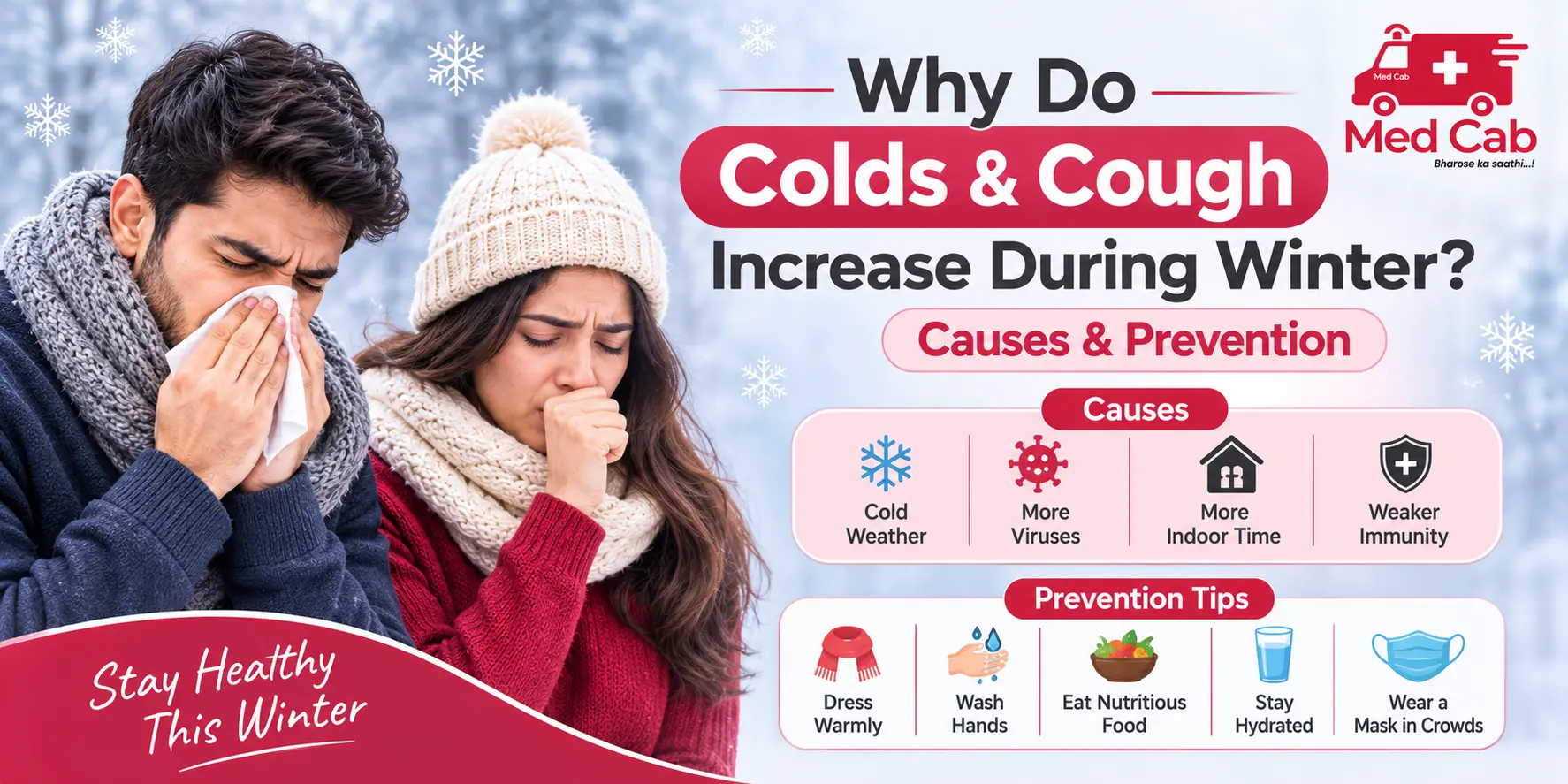
Why Are Colds and Coughs More Common During Winter?
Cold weather does not directly cause a common cold. Respiratory viruses are responsible for these infections. However, during winter, people tend to spend more time indoors, where germs can spread more easily through close contact and respiratory droplets.
Dry air can also affect the natural protective lining of your nose and throat. This may make it easier for certain viruses to enter your body.
Common Winter Symptoms You Should Know
Most seasonal respiratory infections start with mild discomfort. Some common signs include:
- Runny or blocked nose
- Frequent sneezing
- Sore throat
- Dry or persistent cough
- Fever and headache
- Body pain and weakness
- Chest congestion
These winter symptoms may vary from person to person. If you experience breathing difficulties, chest pain or a persistent high fever, consult a doctor rather than ignoring the signs.
How Does Cold Weather Affect Your Immune System?
Your immune system works throughout the year to protect your body from infections. However, poor sleep, stress, unhealthy eating habits, and reduced physical activity can affect your overall health during winter.
A healthy daily routine is important. Eat fresh fruits and vegetables, stay active, drink enough water, and get 7–9 hours of sleep. These simple habits help your body maintain its natural defense mechanisms.
Best Vitamins and Nutrients for Better Immunity
Food plays an important role in keeping your body healthy. If you are wondering about the best vitamins for immune system function, focus on getting enough essential nutrients through your daily diet.
- Vitamin C: Amla, oranges, guava, and lemons are good sources.
- Vitamin D: sunlight exposure and fortified foods can help maintain healthy levels.
- Vitamin A: Carrots, spinach, and sweet potatoes support normal immune function.
- Vitamin B6: Bananas, potatoes, and legumes provide this important nutrient.
- Zinc: Nuts, seeds, and whole grains are useful dietary sources.
Good nutrition provides immune support, but no vitamin or supplement can guarantee protection against infections. Take supplements only when advised by a healthcare professional.
Can Winter Affect Your Mental Health?
Winter can affect more than just your physical health. Shorter daylight hours and changes in daily routines may influence your mood and energy levels.
Some people experience seasonal mood disorder, also known as Seasonal Affective Disorder (SAD), a type of depression associated with seasonal changes. Symptoms may include low mood, reduced interest in activities, increased sleep, and low energy.
Seasonal anxiety may also affect people who experience stress, disrupted routines, or sleep difficulties during colder months. If these feelings continue or interfere with everyday activities, consider speaking with a mental health professional.
Why Do You Feel Tired or Experience Cold Sweats at Night?
Have you ever woken up feeling unusually sweaty or tired, even when the weather is cold? Fever, infections, stress, anxiety, and an uncomfortable sleeping environment can contribute to nighttime sweating.
Problems related to cold sweats and sleep may also occur when your body is dealing with an illness or changes in sleep patterns.
Similarly, cold weather and fatigue can go together when you are recovering from an infection, sleeping poorly or spending less time being physically active.
Maintain a comfortable room temperature, wear suitable nightwear, and follow a regular sleep schedule. Repeated night sweats, especially with unexplained weight loss or persistent fever, should be discussed with a doctor.
8 Simple Ways to Prevent Cold and Cough During Winter
You do not need an expensive routine to stay healthy. A few everyday precautions can make a difference:
- Wash your hands regularly, especially before eating.
- Cover your mouth and nose while coughing or sneezing.
- Avoid close contact with people who have respiratory infections.
- Eat a balanced diet with fresh fruits and vegetables.
- Drink enough water throughout the day.
- Get proper sleep and maintain a healthy routine.
- Keep your home clean and properly ventilated.
- Stay up to date with recommended vaccinations, including the seasonal flu vaccine.
When Should You Consult a Doctor?
Most common colds improve on their own, but certain symptoms need medical attention. Consult a doctor if you experience persistent fever, difficulty breathing, chest pain, severe weakness, or symptoms that improve but return again.
For non-emergency health concerns, you can use Med Cab's Online Video Consultation to connect with a doctor from home and discuss your symptoms.
If your doctor recommends diagnostic testing, Med Cab's Pathology and Home Sample Collection makes it convenient to arrange sample collection at home in Lucknow.