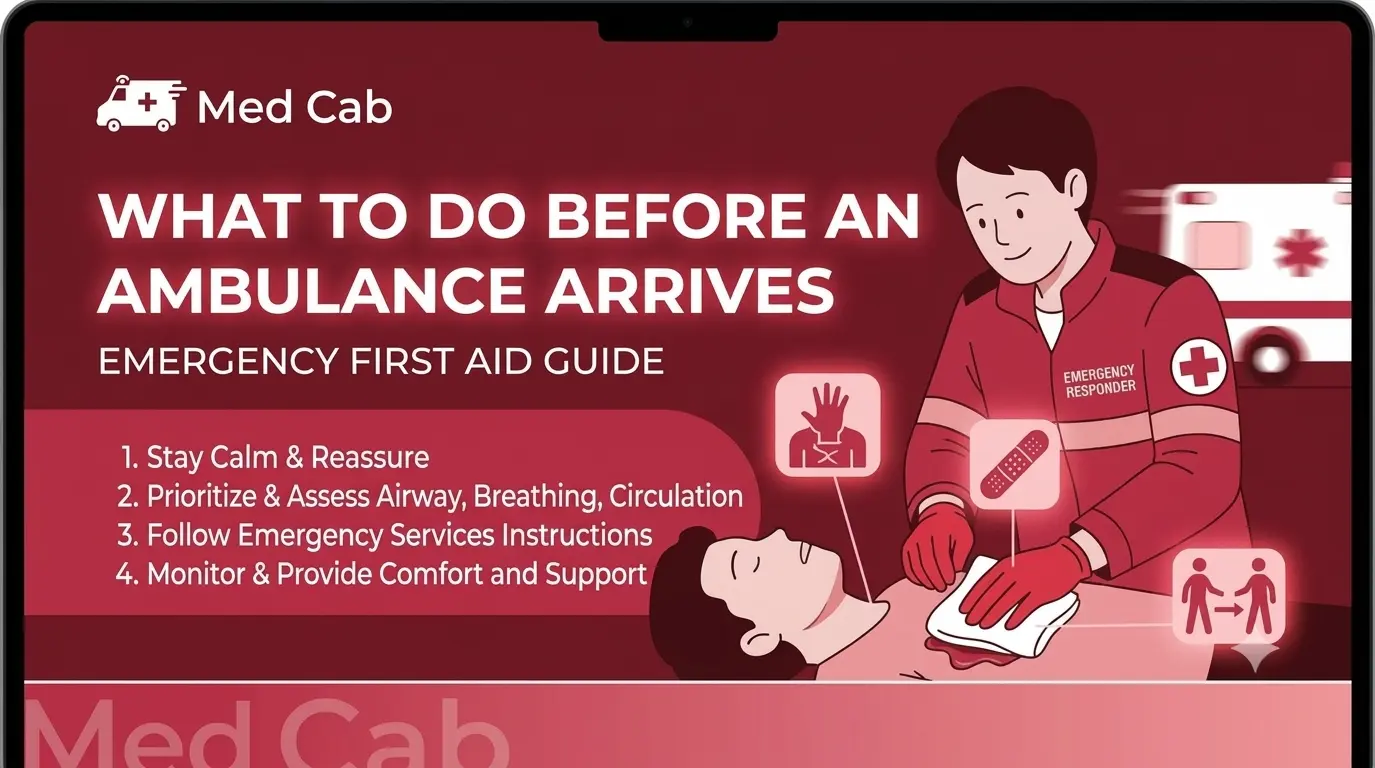
1. Stay Calm and Check the Situation
Before approaching the person, take a moment to check whether the surroundings are safe. Look for dangers such as moving traffic, fire, exposed electrical wires, smoke, or fallen objects.
Do not put yourself at risk while trying to help someone. If the area is unsafe, keep a safe distance and contact the appropriate emergency ambulance services in India.
Once it is safe to approach, check whether the person responds when you speak to them. Ask a simple question, such as, “Can you hear me?” If they do not respond, check whether they are breathing normally.
Avoid shaking the person forcefully, particularly if they may have suffered a fall, head injury, or neck injury.
2. Call for Medical Help Without Delay
If someone has severe breathing difficulty, chest pain, uncontrolled bleeding, sudden weakness, a serious injury, or loss of consciousness, seek emergency medical help immediately.
In India, you can dial 112 for emergency assistance. If you need an ambulance through MedCab, call 1800-890-8208.
When calling, explain the situation in simple words. Share your exact location, a nearby landmark, the patient's condition, and a contact number. If possible, ask another person to make the call while you stay with the patient.
Do not delay seeking help while trying home remedies or waiting to see whether serious symptoms improve on their own.
3. Check Whether the Person Is Breathing Normally
If the person is unresponsive, check for normal breathing. Occasional gasps or irregular, labored breaths should not be mistaken for normal breathing.
If the person is unresponsive and is not breathing normally, call emergency services and follow the dispatcher's instructions. Begin CPR if you can, or follow the guidance provided over the phone. If an automated external defibrillator (AED) is available, ask someone to bring it and follow its voice instructions.
If you are not trained in CPR, the emergency dispatcher may guide you through hands-only CPR for an adult. Do not spend valuable time searching for a pulse if you are not trained to check one.
If the person is unconscious but breathing normally, keep monitoring their breathing. Avoid unnecessary movement, especially if a head, neck, or spinal injury is possible. Follow the emergency dispatcher's advice about the safest position.
4. Control Bleeding and Protect Injuries
Heavy bleeding needs immediate attention. If a person has a serious external wound, apply firm, continuous pressure with a clean cloth or dressing, provided it is safe to do so.
If blood passes through the cloth, place another dressing on top and continue applying pressure rather than repeatedly removing the original dressing.
For a suspected fracture, support the injured area and avoid trying to straighten the limb or push a bone back into place. Do not move someone unnecessarily after a serious fall, road accident, or suspected spinal injury unless there is an immediate danger.
If an object is stuck in a wound, do not pull it out. Apply pressure around the object and wait for medical assistance.
5. Respond Appropriately to Common Emergencies
Different medical emergencies require different responses. Recognizing the signs can help you provide appropriate assistance while waiting for professionals.
Chest pain: Stop the person from exerting themselves and help them rest in a comfortable position. Call emergency services immediately, particularly if the pain is accompanied by sweating, breathlessness, nausea, or discomfort spreading to the arm, jaw, or back. Do not let the person drive themselves to a hospital.
Suspected stroke: Look for a sudden drooping face, weakness in one arm, or difficulty speaking. Note the time the symptoms started and seek emergency assistance immediately, even if the symptoms improve.
Seizure: Move nearby furniture or sharp objects away. Protect the person's head with something soft if possible. Do not restrain their movements or put anything in their mouth. Once the seizure stops, check their breathing and follow emergency guidance.
Burns: Cool a thermal burn under cool running water for 20 minutes if possible. Remove jewelry or clothing near the area unless it is stuck to the skin. Do not apply ice, toothpaste, butter, or other home remedies.
Choking: If the person cannot speak, cough effectively, or breathe, seek emergency assistance and provide age-appropriate choking first aid if you know how. For severe choking, follow recognized first-aid guidance or the emergency dispatcher's instructions.
6. Do Not Give Food, Water, or Medicines Unnecessarily
A person who is unconscious, very drowsy, or having difficulty swallowing should not be given food, water, or oral medicines. These can enter the airway and cause choking.
Do not give someone another person's medication or try to treat severe symptoms with unverified home remedies.
If the person has a known medical condition, such as diabetes, share that information with the emergency team. Follow professional instructions before giving anything by mouth.
7. Keep the Person Comfortable and Reassured
A medical emergency can be frightening for the patient as well as the people around them. Speak slowly, explain that help is on the way, and avoid creating unnecessary panic.
If the person is conscious, ask what they are feeling and whether they have any known allergies or medical conditions. Do not force them to stand, walk, or change position if doing so could worsen their condition.
Keep them warm if they feel cold, but avoid overheating them. Continue observing their breathing, responsiveness, and symptoms until help arrives.
8. Prepare the Location for the Ambulance Team
While one person stays with the patient, another can prepare for the ambulance's arrival.
Keep the entrance and access route clear. If you live in an apartment or a gated society, arrange for someone to guide the ambulance team from the entrance to the patient's location.
Keep relevant medical reports, prescriptions, identification, and a list of regular medicines ready if they are easily accessible. Do not delay urgent care to collect documents.
Be prepared to tell the medical team when the symptoms began, what happened, what first aid was provided, and whether the person's condition has changed.
9. Avoid These Common Mistakes
When panic takes over, people may unintentionally make a situation more dangerous. Avoid the following:
- Do not crowd around the patient or block access for responders.
- Do not move a seriously injured person unless remaining there poses an immediate danger.
- Do not give food, water, or oral medicine to an unconscious person.
- Do not leave the person alone if you can safely stay with them.
- Do not delay emergency assistance while searching for advice online.
- Do not assume that someone is fine simply because their symptoms temporarily improve.
Be Prepared Before an Emergency Happens
You cannot predict every medical emergency, but a little preparation can help you respond more effectively. Keep emergency contact numbers accessible, know your home address and nearest landmark, and learn basic first aid and CPR from a recognized training provider.
When an emergency occurs, focus on three priorities: keep the scene safe, call for professional help, and provide appropriate assistance until responders arrive. Even simple actions, carried out calmly, can make a meaningful difference.
MedCab supports families who need ambulance assistance during urgent medical situations. Knowing whom to contact before an emergency happens can help you act more quickly when every minute matters.