1. Maintain a Proper Record of Every Family Member's Medical History
Medical information is one of the most important things families should organize before an unexpected health situation occurs. During hospital visits, doctors may need details about a patient's previous illnesses, ongoing treatment, allergies, and prescribed medicines. However, family members may not remember every detail, especially when they are under stress.
Maintaining a separate medical record for each family member can make this information easier to access. It should include previous prescriptions, diagnostic reports, hospital discharge summaries, details of past surgeries, and information about any known allergies. Families should also maintain an updated list of medicines that a person takes regularly.
For elderly family members and people receiving long-term care, these records become particularly useful because they may have multiple prescriptions and frequent healthcare appointments. Keeping everything organized in one folder can prevent family members from searching through old documents whenever a hospital visit becomes necessary.
2. Keep Important Healthcare and Emergency Contact Numbers Accessible
During an unexpected health situation, finding the correct contact number can become difficult. Family members may spend valuable time searching online for hospitals, healthcare providers, or transportation services. This problem can be avoided by preparing a contact list in advance.
Every household should maintain the contact details of its regular doctor, nearby hospitals, ambulance providers, close relatives, and trusted neighbors. Families should also identify one person to contact if the primary caregiver is unavailable.
In India, 112 is the pan-India emergency response helpline. Families should save this number along with the relevant local healthcare and ambulance contacts. It is also helpful to keep a written copy of important numbers somewhere accessible at home, especially when elderly family members may not be comfortable using smartphones.
Saving an appropriate medical emergency number in every adult family member's phone can make communication easier when immediate assistance is required. Family members should also understand which service to contact depending on the situation rather than relying on random internet searches.
For ambulance booking and patient transportation assistance, families can contact MedCab at 1800-890-8208. Keeping a reliable service provider's contact details on hand can make transportation arrangements easier when needed.
3. Understand the Importance of Emergency Transportation
Arranging transportation is often one of the biggest challenges families face when a person suddenly needs hospital care. Some families immediately consider using a private car or taxi without understanding whether the patient's condition allows safe travel in an ordinary vehicle.
In certain situations, specialized transportation may be necessary because the patient requires assistance with movement, positioning, or medical support during the journey. Families should understand the available transportation options before they actually need them.
For example, a person who is unable to sit comfortably may require a suitable patient transportation arrangement. Similarly, someone being shifted from one hospital to another may need a vehicle equipped according to their medical requirements.
The type of vehicle should depend on the patient's condition and the recommendations of healthcare professionals. Families should communicate accurate information about the patient's condition while making a booking. Details such as mobility limitations, oxygen requirements, current location, and destination can help the service provider understand the transportation needs.
MedCab provides access to different ambulance arrangements, including BLS, ALS, and ICU ambulance services, depending on patient requirements and availability. Families can explore the ambulance services in Lucknow to understand the available options.
4. Prepare a Basic First-Aid Kit for Your Home
A first-aid kit is a useful household essential that can help families manage minor injuries while arranging further assistance when necessary. However, many households either do not maintain one or keep expired and incomplete supplies.
A properly organized first-aid box should contain basic wound-care materials such as sterile gauze, adhesive bandages, medical tape, disposable gloves, antiseptic wipes, and a digital thermometer. Other basic supplies can be included according to the household's requirements.
The first-aid kit should be stored in a dry and easily accessible location. All adult family members should know where it is kept. It is also important to check the contents periodically and replace expired or damaged products.
Families should understand that first aid is intended for initial support and does not replace professional medical attention. Giving medicines without appropriate guidance or attempting procedures beyond one's knowledge can create additional risks.
If a person experiences severe symptoms, families should contact appropriate emergency assistance instead of delaying professional care while trying to manage the situation independently.
5. Identify Nearby Hospitals and Understand Their Facilities
Knowing where to go during an urgent situation is another important part of family preparedness. Not every hospital provides the same facilities, departments, or patient-care services. Therefore, families should research nearby healthcare facilities before an unexpected situation arises.
Start by identifying hospitals located within a reasonable distance from your home. Check their contact details, location, available departments, and whether they provide the facilities your family may need. Families caring for elderly people or individuals with specific healthcare requirements should also understand which facilities are available nearby.
It is useful to identify more than one hospital instead of depending entirely on a single facility. This gives families alternative options if their preferred hospital cannot accommodate the patient.
For people living in larger cities such as Lucknow, knowing the location of nearby hospitals and understanding the available transportation routes can make planning easier.
However, hospital selection should always depend on the patient's condition, available facilities, and appropriate professional advice. The nearest hospital may not necessarily be the most suitable option for every situation.
6. Keep Essential Documents and Personal Belongings Ready for Hospital Visits
Hospital visits often involve documentation and admission formalities. During stressful situations, families may forget important identity documents, prescriptions, or insurance information. Keeping these items organized in advance can reduce unnecessary confusion.
Families should maintain a small folder containing identity proof, health insurance details, previous prescriptions, medical reports, and relevant hospital documents. If a patient has already received treatment at another facility, carrying the previous discharge summary can also help healthcare professionals understand the treatment history.
Apart from documents, it is useful to keep a small hospital bag ready for situations that may require an extended stay. Basic clothes, slippers, toiletries, a towel, a mobile charger, and essential personal belongings can be included.
For elderly patients, families should remember items such as spectacles, hearing aids, and mobility accessories. These may seem like small things, but they can make the hospital experience more manageable for the patient.
Keeping the bag in a known location and informing other family members about it ensures that someone can collect it when required.
7. Understand the Role of Healthcare Professionals During Urgent Situations
Many families are unfamiliar with the different professionals involved in emergency transportation and hospital care. Understanding their roles can help people communicate more effectively and know what kind of assistance they can expect.
A paramedic is a trained healthcare professional who provides emergency medical assistance within their authorized scope of practice. Depending on the situation and service arrangement, paramedics may assist with patient assessment and initial support and care during transportation.
Similarly, emergency care teams may include trained medical personnel who help manage patients according to their needs. Their responsibilities depend on the patient's condition, the facilities available, and the type of service being provided.
Families can support the process by sharing accurate information about the patient's medical history, allergies, prescribed medicines, and current condition. They should also inform the healthcare team about any relevant changes that occurred before assistance arrived.
Clear communication helps professionals understand the situation and make appropriate decisions. Families should avoid withholding information or making assumptions about what details are important.
8. Make a Family Communication and Responsibility Plan
When someone in the family needs urgent medical attention, several things may need to happen simultaneously. Transportation may need to be arranged, documents collected, hospital details confirmed, and other relatives informed.
Without proper communication, multiple family members may try to complete the same task while other important arrangements remain unattended.
A simple family communication plan can help avoid this confusion. Families can decide in advance who will contact healthcare providers, who will collect the medical records, and who will accompany the patient. Another family member can remain responsible for informing close relatives and managing other household responsibilities.
This planning becomes particularly important in households where elderly parents live with children who have work commitments. If the primary caregiver is unavailable, another trusted family member should know how to manage the basic arrangements.
Families should also discuss the plan with elderly members so they understand whom to contact if they are alone at home. A written contact list can be especially useful for people who are not comfortable using mobile applications.
9. Plan Home Care Support for Patients Who Need Regular Assistance
Healthcare responsibilities do not always end after hospital treatment. Some patients need continued assistance when they return home, particularly elderly individuals, people with mobility limitations, and patients recovering from major medical procedures.
Managing all these responsibilities without support can become difficult for family members who also have jobs and other commitments. Therefore, understanding available home-care arrangements in advance can help families plan better.
Depending on the patient's needs and professional recommendations, support may include nursing assistance, patient attendants, general duty assistants, and physiotherapy services. These professionals can help with different aspects of daily care according to their qualifications and assigned responsibilities.
Before arranging a caregiver, families should understand the patient's requirements and check the person's qualifications, experience, and responsibilities. They should also communicate any specific instructions provided by the treating healthcare professional.
MedCab offers home-care support options for families seeking assistance with patient care and daily caregiving arrangements. You can explore the available home care services in Lucknow to learn more.
10. Understand Medical Equipment Requirements Before Bringing a Patient Home
Some patients may require medical equipment as part of their home-care arrangements. Depending on their condition, this may include hospital beds, wheelchairs, oxygen concentrators, or respiratory support equipment.
Families should not purchase or rent equipment without first understanding the patient's requirements. The treating healthcare professional should guide them regarding the type of equipment needed and its appropriate use.
Before arranging medical equipment, families should check its condition, maintenance, operating instructions, and availability of technical support. They should also ask the provider to explain how the equipment works.
For devices involving oxygen or respiratory support, following professional instructions is particularly important. Family members should never independently change equipment settings or attempt unfamiliar procedures.
Arranging suitable equipment and understanding its use before the patient returns home can make the transition from hospital to home more organised.
11. Know When Professional Medical Assistance Is Necessary
One of the most important parts of preparedness is understanding that not every health situation can be managed at home. Families sometimes delay seeking assistance because they expect symptoms to improve or are unsure whether hospital care is necessary.
Severe breathing difficulty, loss of consciousness, serious injuries, sudden chest discomfort, and other potentially life-threatening symptoms require immediate professional assessment. Families should not wait for the situation to become worse before seeking help.
An emergency doctor can assess the patient's condition and recommend appropriate next steps. Family members should share relevant information and follow the instructions provided by qualified healthcare professionals.
If someone becomes unconscious or is not breathing normally, contact emergency assistance immediately and follow the instructions given by the emergency response team. Do not give food, water, or medicines to an unconscious person.
Knowing when to seek assistance is just as important as keeping documents and contact numbers ready. Early communication with appropriate healthcare professionals can help families avoid unsafe decisions.
How MedCab Helps Families Access Healthcare Services
Managing healthcare arrangements becomes easier when families know where to find the services they may need. MedCab is a healthcare service platform that provides access to ambulance booking, patient transportation, and other healthcare-related services through online and phone-based arrangements.
Families can explore different ambulance options, including BLS, ALS, and ICU ambulance services, according to patient requirements. Air ambulance arrangements are also available for suitable long-distance patient transfers.
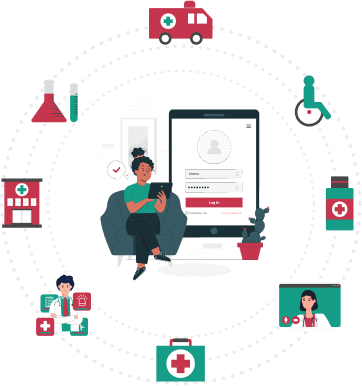
Apart from transportation, MedCab provides access to home-care services, pathology and home sample collection in Lucknow, online video consultation, bed availability assistance, and medical equipment rental options.
These services can help families explore different healthcare arrangements through a single platform rather than searching separately for every requirement.
To understand the available services, visit the MedCab website. For ambulance booking and service-related assistance, call 1800-890-8208.
Conclusion
Preparing for unexpected healthcare situations is an important responsibility for every family. Although nobody can predict when a person may need urgent medical attention, having essential information and arrangements ready can reduce confusion and help families respond more effectively. Start by organising medical records, saving important contact numbers, identifying nearby hospitals, and understanding available transportation options. Families should also discuss responsibilities, prepare necessary documents,s and consider home-care support for members who need regular assistance.
Preparation does not require complicated arrangements or expensive purchases. Even small steps, when taken in advance, can help families manage difficult situations with greater confidence.
MedCab – Bharose Ka Saathi. For ambulance booking and healthcare service assistance, call 1800-890-8208 or visit https://medcab.in/.