What Is Vitamin D3 Deficiency?
Vitamin D3 deficiency means the body has an inadequate amount of vitamin D. Vitamin D3 is also known as cholecalciferol. Doctors measure it with a blood test called 25-hydroxy vitamin D [25(OH)D]. Prolonged deficiency may cause different bone diseases in adults as well as in children. Some of them are explained below.
Rickets
Rickets may be caused by low vitamin D in children. Due to this, bones may become soft and weak and may grow bent or misshapen.
Osteomalacia
It is similar to rickets, but osteomalacia affects adults. It causes soft, weak bones and bone pain.
Osteoporosis
Along with low calcium, long-term low vitamin D can contribute to osteoporosis. In this condition, bones become porous (full of tiny holes) and break more easily.
Vitamin D3 Deficiency Symptoms
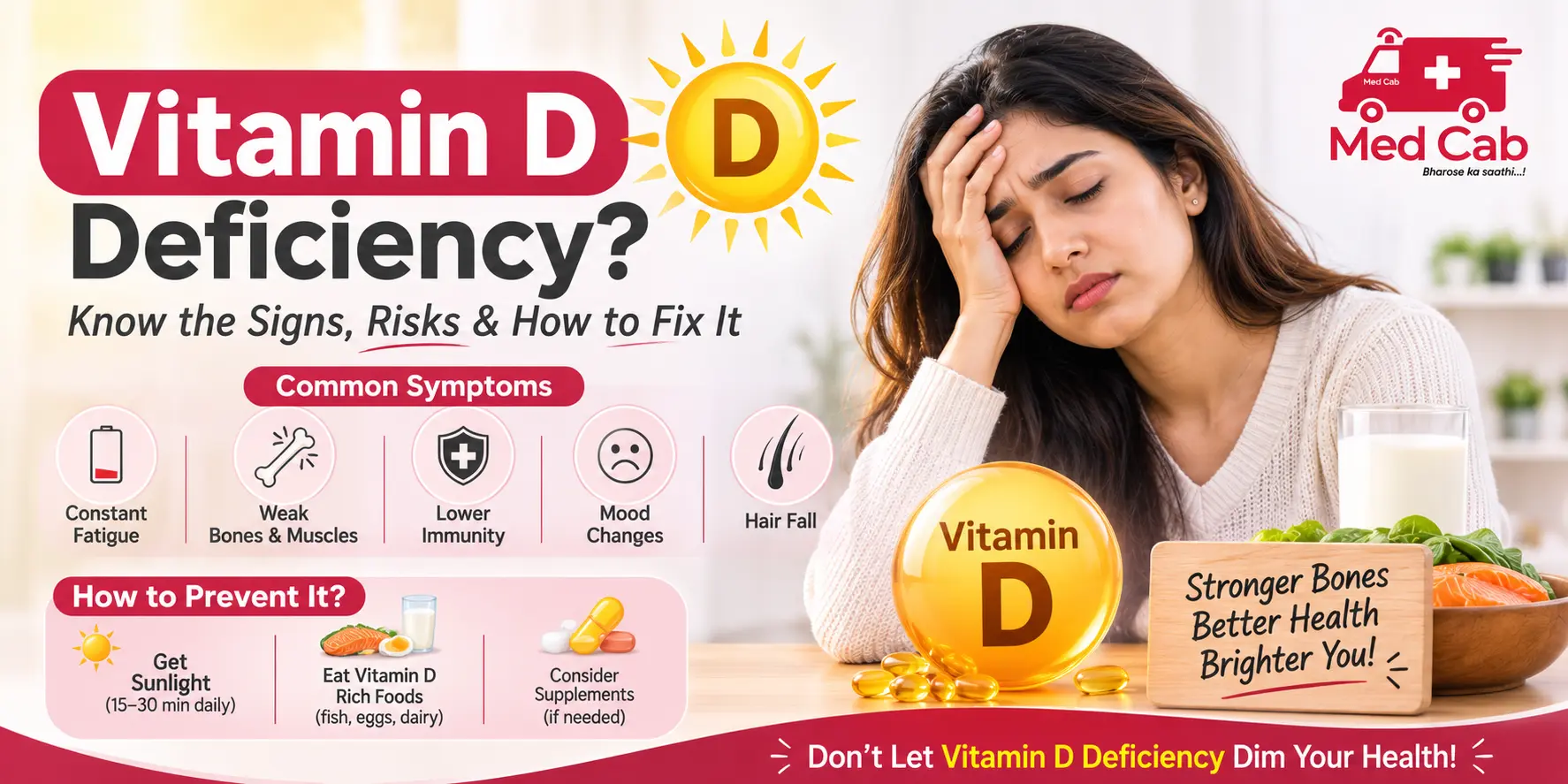
Many people with low vitamin D have no symptoms, and only a blood test can confirm it. When symptoms do appear, they may include:
- Muscle cramps and muscle weakness
- Bone pain
- Tiredness
- Mood changes (may be linked to low vitamin D)
- Hair loss (may be linked to low vitamin D)
Bone fractures can be a complication of long-term deficiency, especially with a minor fall or injury.
Vitamin D Normal Range
A vitamin D level below 12 ng/mL (30 nmol/L) is linked to a higher risk of deficiency. A level of 20 ng/mL (50 nmol/L) or more is enough for most people. Ranges can differ between sources and labs, so ask your doctor to explain your report.
If you have symptoms or risk factors, a blood test (25-hydroxy vitamin D) can confirm your level. In Lucknow, you can book this test at home with Med Cab. Our platform offers healthcare services such as lab tests at home. If you need a doctor consultation after your results, you can easily schedule an online video consultation on our official website or the Med Cab application.
Vitamin D Sources
Sunlight
Sunlight is important for vitamin D synthesis. According to NIH, around 5 to 30 minutes of sun exposure, ideally late morning to early afternoon and a few times a week, can help the body make enough vitamin D. The time needed depends on the season, skin melanin content, and sunscreen use. People with darker skin need more exposure than those with lighter skin. Avoid sunburn.
Food
Cod liver oil, fatty fish like salmon, egg yolks, and UV-exposed mushrooms contain good amounts of vitamin D. Cheese and fortified foods contain smaller amounts.
Supplements
Vitamin D has two forms: D3 (cholecalciferol) and D2 (ergocalciferol). Both can raise vitamin D levels in the blood and are well absorbed in the gut. Studies suggest that D3 may raise blood levels more and keep them higher for longer than D2. A vitamin D3 tablet is commonly used to treat low levels and support bone and muscle health. Taking too much vitamin D from supplements can be harmful, so the dose should always be decided by a doctor based on your blood test.
How to Increase Vitamin D Naturally
If you want to increase your vitamin D level naturally, lifestyle changes can make it easier. Spend some time in the sun regularly to support natural vitamin D synthesis. Include vitamin D-rich foods such as fatty fish, egg yolks, and UV-exposed mushrooms in your diet. If your level stays low, your doctor may suggest a supplement.
Causes and Risk of Vitamin D3 Deficiency
The most common causes are too little sunlight and too little vitamin D in the diet. Some people eat well but cannot absorb vitamin D properly because of a gut or digestion problem. In others, the liver or kidneys cannot turn vitamin D into the active form the body needs. Some medicines can also interfere with how your body absorbs or uses vitamin D.
Anyone can become deficient, but some people are more likely to.
- Breastfed babies. Breast milk contains very little vitamin D. Ask your child’s doctor whether your baby needs a supplement.
- Older adults. With age, skin makes less vitamin D from sunlight, and the kidneys convert it less well.
- People with darker skin. Darker skin makes vitamin D from the sun more slowly.
- People with digestive conditions. Crohn’s disease, ulcerative colitis, and celiac disease make it harder to absorb nutrients from food.
- People with obesity. Body fat can hold on to vitamin D, so less of it reaches the blood.
- People who have had gastric bypass surgery. Vitamin D is absorbed in part of the small intestine that the surgery bypasses.
- People with kidney or liver disease. These organs help activate vitamin D, so disease can reduce how much your body can use.
- People taking certain medicines. Some cholesterol, anti-seizure, steroid, and weight-loss medicines can lower vitamin D levels.
For older persons and others like breastfeeding mothers can also arrange a professional caretaker such as nurses, GDA & female attendent, etc at home with Med Cab in Lucknow. Dial 1800-890-8208 for easy booking.
When to Talk to a Doctor
If you fall into any of these groups, speak to your doctor. You should also see a doctor if you have persistent bone pain, muscle weakness, or frequent fractures. A simple blood test can show how much vitamin D is in your body. With Med Cab, you can book a vitamin D3 test at home and consult a doctor online.
Sources
- Vitamin D Fact Sheet for Health Professionals, NIH Office of Dietary Supplements: https://ods.od.nih.gov/factsheets/VitaminD-HealthProfessional/
- Vitamin D Deficiency, MedlinePlus: https://medlineplus.gov/vitaminddeficiency.html
- Vitamin D Test, MedlinePlus: https://medlineplus.gov/lab-tests/vitamin-d-test/