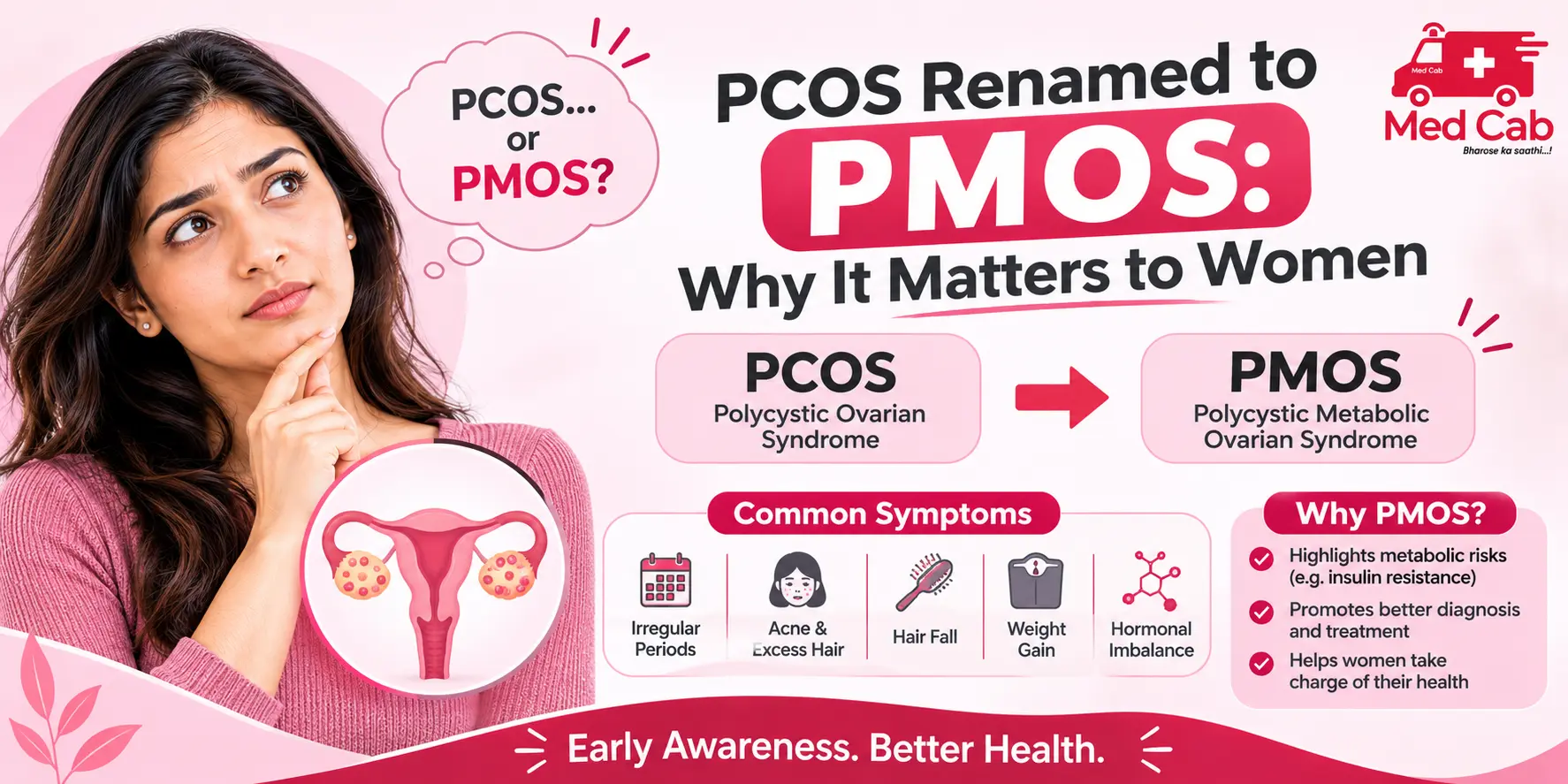
Why Was PCOS Renamed to PMOS?
On 12 May 2026, a panel of experts announced that PCOS would be renamed. This news was published in a research paper in The Lancet. Experts said that PCOS carries misleading terminology and prioritises the ovarian symptoms while not fully reflecting the other major aspects. Not every woman has an ovarian cyst, so the disorder is beyond the ovary.
The new name of PCOS is PMOS, which stands for Polyendocrine Metabolic Ovarian Syndrome. In which polyendocrine refers to an imbalance of more than one hormone, the metabolic term points out that the condition is also linked to metabolism, like weight gain, and the ovary tells this syndrome can be linked to the reproductive system.
The updated PCOS name reflects the real meaning of the disease. It shows that the condition is not only of the reproductive system but also related to hormonal imbalance and metabolism.
Now the new name PMOS is accurate and can help the doctor to diagnose the issue early.
This complete name, PMOS, can reduce complications in the detection of the disorder and will provide personalised care to patients.
What Is PMOS?
PMOS is the new name for PCOS, and its full form is Polyendocrine Metabolic Ovarian Syndrome. It affects one in eight women. This condition is related to the endocrine (hormone) gland, metabolism, and ovaries of an individual.
In PMOS, many patients may experience symptoms such as irregular menstrual cycles, ovarian cysts (fluid- filled sacs in the ovary), unusual hair, and weight gain. The risk of the development of diabetes and heart-related disease will increase in that situation.
Symptoms of PMOS are not the same in every affected individual; because of this, some individuals don't get proper treatment on time, which may lead to fertility issues.
Symptoms of PMOS
There are some common symptoms of PMOS (renamed from PCOS) that mostly females experience. It is not necessary; not every woman may have the below symptoms, so proper diagnosis or health consultation is important to verify it.
- Irregular Periods
- Ovarian cysts
- Excess Facial hair
- Hair loss
- Acne
- Obesity/Weight gain
- Mood swings
- Fertility issues
Causes and Risk Factors of PMOS
The cause of PMOS is not clearly known, but medical experts said it may be due to several reasons, such as:
- Hormonal disfunction
- Insulin resistance
- Sleep cycle disturbances
- Stress
- Poor diet
- No Physical activity
- Genetic
- Weight gain
Healthcare experts also said that the risk of PMOS may be high in some females. Those women who have a family history of PMOS or insulin resistance may have a higher chance of getting PMOS compared to others.
The common risk factors of PMOS include:
- Family history of PMOS (renamed from PCOS) or diabetes
- Lifestyle habits
- Sugary, fatty food
- Hormonal changes
How Is PMOS Diagnosed?
Diagnosis is crucial to confirm the presence of the disease. Females who face the above symptoms of PMOS are advised to consult healthcare professionals.
PMOS condition may be diagnosed by the following these things:
- Ultrasound examination
- Blood test
- Checking male hormone levels
- Blood glucose level
- Other hormone tests, including thyroid
- Medical history of the patient
Early diagnosis is beneficial to prevent future complications. Consulting the best gynaecologist is good for better management of PMOS. Females can book an online lab test or doctor consultation in Lucknow by using the Med Cab app or website.
Treatment Options for PMOS
PMOS is a lifestyle-related disorder, and it has no cure. The treatment of PMOS at the earliest stage can help to overcome the symptoms. To control the symptoms of PMOS, it is necessary to change your daily habits, including sleep, food, movement of body, and stress. Although it doesn't have a single symptom, focusing on overall health is important to manage this.
Prevention and Management of PMOS
Prevention is the best option to protect yourself. But if you experience PMOS-related signs, then it is really essential to control it in time.
Manage the symptoms of PMOS by including the following habits in your daily life:
Physical activity:
Physical activity is very important to maintain a healthy body weight. According to the WHO, 30 minutes of regular exercise is advised for women with PMOS even if they don't lose weight.
Sleep cycle:
The quality of sleep also raises health concerns, so a proper sleep of 7-8 hrs is recommended.
Balanced Diet:
Food that contains high amounts of sugar and fat can make the condition severe.
Include protein, fibre, and essential oil-rich food in your diet. Also eat fruits and maintain a healthy diet.
Medications:
To manage the symptoms of PMOS, your healthcare provider may prescribe you some medicine.
Take the medicine on time without skipping it. These medicines can help you overcome the problem fast.
Conclusion
PCOS is a multiple health condition, and it is the most common hormonal disorder in females. It may affect 1 in 8 women. PCOS is now renamed to PMOS, which was announced on 12 May 2026 in The Lancet research paper.
This new name, PMOS, now clearly addresses the disorder and helps doctors to provide personalised care to each woman. To arrange an online doctor appointment, use the Med Cab booking app or dial 1800-890-8208 for quick service guidance.
Source
The Lancet: https://share.google/TOWiWFfNNxIPycQGM
World Health Organisation (WHO): https://share.google/lXv860z6DoPpMMqZj
Medical News Today: https://share.google/gJW322eIotVkCAwFu
Mayo Clinic: https://share.google/xlKOgSsO7kpc7yIut