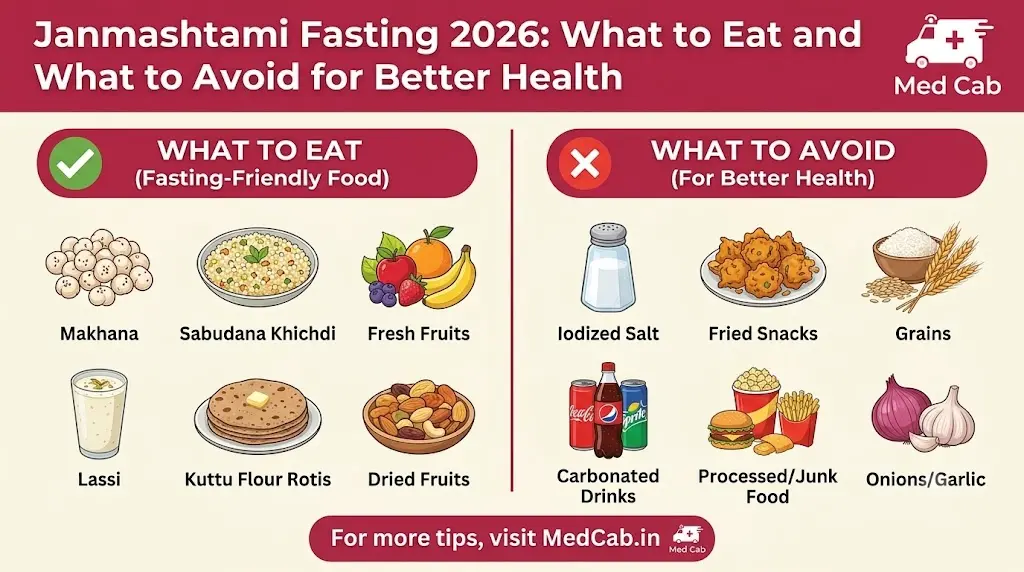
Why Should You Pay Attention to Your Diet During Janmashtami Fasting?
When you follow your usual routine, your body receives food and fluids at regular intervals. During a fast, that routine changes.
You may skip breakfast and lunch, avoid certain grains and vegetables, or eat only once during the day. If you don't plan your meals properly, you may end up consuming too little nutrition—or eating too many fried foods once hunger becomes difficult to control.
Some common problems people may experience while fasting include:
- Weakness and tiredness
- Headache
- Dizziness
- Excessive thirst
- Acidity or indigestion
- Constipation
- Irritability
- Low energy
- Difficulty concentrating
Fasting affects everyone differently. What feels comfortable for one person may not work for another.
What to Eat During Janmashtami Fast?
Vrat food doesn't have to be boring or unhealthy. In fact, several commonly used fasting foods can provide energy, fiber, healthy fats, and essential nutrients.
Here are some better choices to include, depending on your fasting tradition.
1. Fresh Fruits
Fruits are one of the simplest options during a fast.
Bananas, apples, papayas, guavas, oranges, pomegranates, and watermelons can provide natural carbohydrates, fiber, vitamins, and fluids.
A banana can be especially convenient when you feel hungry or low on energy.
If you're spending the day outside for temple visits or celebrations, carrying a fruit with you can also prevent you from going several hours without eating anything.
Tip: Choose whole fruits instead of packaged fruit juices whenever possible.
2. Coconut Water
If coconut water is permitted during your fast, it can be a refreshing way to increase fluid intake.
It contains water and naturally occurring electrolytes and can be particularly useful when you are spending time outdoors or feeling thirsty.
Don't wait until you are extremely thirsty to drink. Taking fluids regularly, according to your fasting rules, can help you feel more comfortable.
3. Milk and Curd
Milk and curd can provide protein and calcium while making your fasting meals more filling.
You can have plain curd with fruit or include milk in a simple smoothie.
If you have difficulty digesting dairy products, choose foods that suit you better rather than forcing yourself to consume milk simply because it's a traditional fasting food.
4. Nuts and Seeds
Almonds, walnuts, peanuts, cashews, and suitable seeds are useful sources of healthy fats and can help make a small snack more satisfying.
However, nuts are calorie-dense, so you don't need a large bowl.
A small portion between meals can be enough.
If you like soaked almonds in the morning, they can be an easy addition to your fasting routine.
5. Makhana
Makhana is another popular fasting food.
Instead of deep-frying it, try lightly roasting it with a small amount of ghee and suitable seasoning.
It gives you something crunchy to snack on without automatically turning your fasting routine into a day of fried food.
6. Sabudana
Sabudana is a favorite during vrat, particularly in the form of sabudana khichdi.
It provides carbohydrates and can be combined with peanuts to make the meal more satisfying.
But portion size matters.
A large plate loaded with ghee, oil, and peanuts can become quite heavy. A moderate serving with suitable ingredients is a better approach.
7. Kuttu and Singhara Flour
Kuttu and singhara flour are commonly used in fasting meals, depending on individual and family traditions.
You can prepare simple rotis, cheelas, or other dishes using these flours.
Try using less oil and avoid deep-frying every meal. A lightly cooked cheela can be a much more comfortable option than repeatedly eating fried puris.
8. Potatoes in Moderation
Potatoes are commonly included in vrat meals and can provide carbohydrates.
Boiled or lightly cooked potatoes can be included in moderation.
The bigger concern is how they are prepared. Eating fried potato chips, fries, or heavily oily potato dishes throughout the day can leave you feeling bloated and sluggish.
What Should You Avoid During Janmashtami Fasting?
The word “vrat” doesn't automatically make every fasting food healthy.
Many popular vrat snacks are deep-fried or loaded with salt, sugar, and fat. Having them occasionally isn't necessarily the issue—the problem is making them the main part of your diet for the entire day.
1. Too Many Fried Foods
Kuttu puri, sabudana vada, pakoras, and fried potato snacks may be tempting, especially during family gatherings.
But eating fried food repeatedly can cause heaviness, acidity, and digestive discomfort.
Try balancing heavier foods with fruits, curd, and lighter options.
2. Excess Salt
Sendha namak is commonly used during fasting, but that doesn't mean you should consume unlimited amounts.
Excess salt can increase thirst and may not be appropriate for people who have been advised to restrict sodium intake.
If you have high blood pressure or another condition requiring dietary restrictions, speak with your healthcare professional about your fasting routine.
3. Excess Sugar and Sweets
Janmashtami celebrations often come with plenty of sweets and prasad.
Enjoying a small portion can be part of the celebration, but consuming large amounts of sweets after fasting for many hours can leave you feeling uncomfortable and may cause a rapid rise in blood sugar.
Enjoy the festive food—but don't let sweets become your entire meal.
4. Too Much Tea and Coffee
When you're tired during a fast, reaching for another cup of tea or coffee may seem like an easy solution.
However, too much caffeine can cause acidity, restlessness, or headaches in some people.
Instead of depending on tea or coffee to get through the day, prioritize suitable fluids and nutritious fasting foods.
5. Packaged Fasting Snacks
Many packaged snacks are marketed as “vrat-friendly.”
But fasting-friendly doesn't necessarily mean nutritious.
Some can contain significant amounts of salt, fat, or sugar. Check the nutrition information where available and choose homemade snacks whenever practical.
How to Stay Hydrated During Janmashtami
Hydration is easy to forget when you're busy with पूजा, temple visits, cooking, and family celebrations.
If your fasting rules allow fluids, make them a priority.
Depending on your tradition and dietary needs, suitable options may include:
- Water
- Coconut water
- Milk
- Buttermilk
- Lemon water without excessive sugar
However, some people observe a strict fast that includes avoiding water. Such fasting may not be suitable for everyone.
Pregnant women, older adults, people with certain medical conditions, and those taking regular medication should speak with a healthcare professional before following a strict fast.
How to Break Your Janmashtami Fast Safely
For many devotees, breaking the fast at midnight is an important part of Janmashtami.
And after thinking about food all day, it can be tempting to eat a little bit of everything!
But your digestive system may not appreciate that plan.
Start slowly.
Have something light first and give yourself some time before eating a larger meal.
Good options may include fruit, curd, milk, or a simple homemade meal, depending on your fasting practice.
Try to avoid immediately combining a large meal with lots of fried food, sweets, and sugary drinks.
Janmashtami Fasting for People With Diabetes
If you have diabetes, fasting requires additional care.
Skipping meals or changing your normal eating pattern can affect blood glucose levels. Some diabetes medications can also increase the risk of low blood sugar when food intake is reduced.
If you have diabetes, speak with your doctor before fasting.
Your healthcare provider can advise you about:
- Whether fasting is appropriate
- Blood glucose monitoring
- Meal timing
- Medication adjustments
- Warning signs to watch for
Don't change your medication schedule on your own simply because you're fasting.
Can Pregnant Women Fast During Janmashtami?
Pregnancy increases the body's nutritional and fluid requirements.
For this reason, pregnant women should not start a strict or prolonged fast without discussing it with their doctor.
If you want to observe Janmashtami, your healthcare provider can suggest an approach that better suits your pregnancy and nutritional needs.
Common Mistakes to Avoid During Janmashtami Fast
Skipping Fluids
If your fasting practice allows fluids, remember to drink regularly.
Eating Only Fried Food
Vrat doesn't mean every meal has to be puri, vada, or chips.
Overeating After the Fast
After waiting all day, eating a huge meal at once can lead to bloating and discomfort.
Too Many Sweets
Festivals naturally bring sweets, but moderation is important.
Ignoring Existing Health Problems
Diabetes, pregnancy, kidney problems, heart conditions, and certain medications may require special precautions.
Not Planning Your Meals
A little planning can prevent you from becoming extremely hungry and then overeating whatever is available.
When Should You Seek Medical Help?
Most people can manage a well-planned fast without serious problems. But some symptoms should never be ignored.
Seek medical attention if you experience:
- Fainting or loss of consciousness
- Severe or persistent dizziness
- Confusion
- Severe weakness
- Difficulty breathing
- Chest pain
- Repeated vomiting
- Signs of significant dehydration
- Any sudden or unusual deterioration in your health
If you're unsure whether fasting is suitable for you, it's better to ask a healthcare professional before starting rather than waiting until you feel unwell.
This Janmashtami, celebrate with devotion, enjoy your favorite traditions, and take care of the most important thing you have—your health.