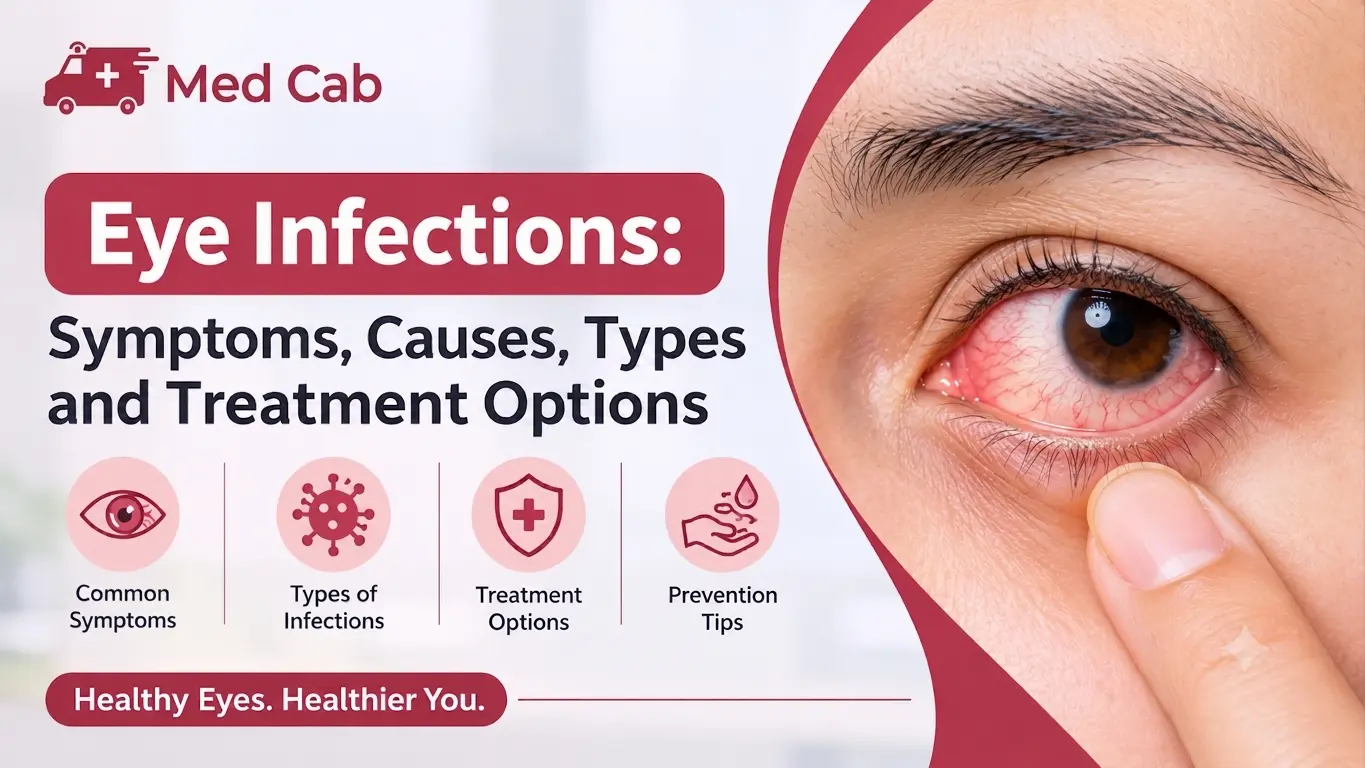
What Is an Eye Infection?
An eye infection develops when microorganisms such as viruses, bacteria, or fungi affect the eye or surrounding tissues. Different parts may be involved, including the conjunctiva, cornea, eyelids, and other structures. The symptoms depend on the affected area and the organism responsible. Some people experience mild redness and irritation, while others may develop pain, swelling, discharge, or vision changes.
These conditions can spread through direct contact with infected discharge, unwashed hands, shared towels, cosmetics, or improperly maintained contact lenses. In certain cases, symptoms may begin in one eye and later affect the other. It is important to understand that not every red or itchy eye is caused by an infection. Allergies, dry eyes, and environmental irritation can produce similar symptoms. A proper examination helps identify the cause and determine the right care.
Different Types of Eye Infections
Eye-related conditions can affect different structures and vary in severity. Some commonly encountered conditions include conjunctivitis, styes, blepharitis, and keratitis.
1. Conjunctivitis
Conjunctivitis is inflammation of the conjunctiva, the thin, transparent membrane covering the white part of the eye and the inside of the eyelids. It may occur due to viruses, bacteria, allergens, or irritants.
Common symptoms include redness, watering, itching, and discharge. In bacterial cases, the discharge may be thicker, while viral cases often cause watery discharge. The eyelids may also stick together after sleeping.
2. Stye
A stye is a small, painful lump that develops near the edge of the eyelid. It usually occurs when an oil gland or eyelash follicle becomes blocked and infected, often due to bacteria.
The affected area may become red, swollen, and tender. Some people also experience watering or a feeling that something is stuck in the eye. Avoid squeezing the lump because this can worsen irritation or spread infection.
3. Blepharitis
Blepharitis refers to inflammation along the eyelid margins, particularly around the base of the eyelashes. It may be associated with bacterial overgrowth, blocked oil glands, or certain skin conditions. People may notice crusting around their eyelashes, itching, burning, or a gritty sensation. Regular eyelid hygiene may help manage the condition, although persistent symptoms require professional assessment.
4. Keratitis
Keratitis is inflammation of the cornea, the clear front surface of the eye. It may develop due to microorganisms, injury, or improper contact lens use.
Symptoms can include pain, redness, blurred vision, excessive watering, and sensitivity to light. Since the cornea plays an important role in clear vision, suspected keratitis requires prompt examination by an eye specialist.
5. Uveitis
Uveitis is inflammation of the uvea, the middle layer of the eye. It can be associated with infections, autoimmune conditions, or other underlying health problems.
Possible symptoms include eye pain, redness, blurred vision, and sensitivity to bright light. Medical evaluation is important because untreated inflammation may lead to complications affecting eyesight.
What Causes Eye Infections?
Several factors can increase the chances of developing an eye-related condition. Understanding these causes helps people follow safer hygiene practices and reduce avoidable exposure.
1. Poor hand hygiene: Touching or rubbing the eyes with unwashed hands can transfer microorganisms to sensitive eye tissues.
2. Sharing personal items: Towels, handkerchiefs, cosmetics, and eye-care products may become contaminated and contribute to the spread of certain infections.
3. Improper contact lens care: Wearing lenses for longer than recommended, sleeping in them without professional approval, or cleaning them incorrectly can increase the risk of corneal problems.
4. Exposure to infected discharge: Direct contact with discharge from an affected eye may spread certain contagious conditions.
5. Dust and environmental irritants: Dust, smoke, pollution, and chemicals can irritate the eyes. Irritation does not always mean infection, but it may cause discomfort and make symptoms worse.
6. Contaminated eye products: Expired cosmetics, unclean applicators, and unsuitable eye products can cause irritation and increase the risk of problems.
7. Underlying health conditions: Certain health conditions or reduced immunity may increase vulnerability to infections and affect recovery.
Common Symptoms to Watch For
Symptoms vary according to the cause and the part of the eye affected. They may develop gradually or appear suddenly.
Some warning signs include:
- Redness in one or both eyes
- Persistent itching or burning
- Excessive watering
- Yellowish or greenish discharge
- Swelling around the eyelids
- Pain or tenderness
- Sensitivity to bright light
- Blurred or reduced vision
- Crusting around the eyelashes
- A gritty or foreign-body sensation
A common eye infection may initially appear mild, but symptoms should be monitored carefully. If discomfort increases, vision changes or pain develops, medical advice should be sought instead of relying on home remedies.
How Are Eye Infections Diagnosed?
An eye specialist generally begins by asking about the symptoms, their duration, and any recent exposure to irritants or infected individuals. Information about contact lens use, previous eye problems, and medication history may also be helpful.
The examination may involve the following steps:
1. Symptom assessment: The doctor asks about redness, discharge, itching, pain, and changes in vision.
2. External examination: The eyelids, eyelashes, and visible parts of the eye are checked for swelling, irritation, or discharge.
3. Vision assessment: Visual clarity may be checked to identify any changes that need further investigation.
4. Slit-lamp examination: A specialized microscope may be used to examine the front structures of the eye in detail.
5. Laboratory testing: In selected cases, a sample of eye discharge or tissue may be collected to identify the microorganism responsible.
Not every patient requires laboratory tests. The type of examination depends on the symptoms and the suspected condition.
Available Treatment Options
The appropriate eye infection treatment depends on its underlying cause, severity, and the part of the eye affected. Treatment should be recommended by a qualified healthcare professional after an examination.
1. Care for Viral Eye Conditions
A viral eye infection may improve on its own, depending on the virus and the person's overall health. Supportive care may include applying a clean, cool compress to closed eyelids, maintaining eyelid hygiene, and avoiding eye rubbing.
Antibiotic drops do not treat viral causes. Certain viral conditions, including herpes-related infections, may require specific antiviral medicines prescribed by an eye specialist.
2. Managing Conjunctivitis
Conjunctivitis treatments depend on whether the condition is viral, bacterial, allergic, or caused by irritation.
- Viral cases may require supportive care and hygiene measures.
- Bacterial cases may need prescription antibiotic drops or ointments.
- Allergic cases may be managed with suitable anti-allergy medicines and by avoiding triggers.
People should avoid using another person's eye drops or leftover medication. The wrong medicine may delay proper care or worsen certain conditions.
3. Managing a Stye
Stye treatment usually begins with simple care measures, such as placing a clean, warm compress over the closed eyelid for around 10–15 minutes several times a day.
Avoid squeezing the lump, rubbing the eyelid, or applying unprescribed creams. If swelling becomes severe, pain increases, or the lump does not improve, consult an eye specialist. In some cases, medical treatment or drainage may be necessary.
4. Treatment for Other Conditions
Conditions such as keratitis, blepharitis, and uveitis require care based on their specific causes. Depending on the diagnosis, a doctor may recommend prescription medicines, eyelid care, or further investigations.
Steroid-containing eye drops should never be used without medical supervision because they can worsen certain infections and cause additional complications.
How to Prevent Eye Infections
Good hygiene and safe eye-care habits can reduce the risk of many preventable conditions. Small changes in daily routines can help protect the eyes.
Follow these precautions:
- Wash your hands before touching your eyes or handling contact lenses.
- Avoid rubbing your eyes, especially with unwashed hands.
- Do not share towels, handkerchiefs, or eye makeup.
- Clean and store contact lenses according to professional instructions.
- Replace old or expired eye cosmetics.
- Remove makeup before sleeping.
- Avoid using contaminated water to clean your eyes.
- Follow hygiene precautions when caring for someone with a contagious condition.
- Keep personal eye-care products clean and properly stored.
- Seek medical advice if redness or irritation continues.
People who wear contact lenses should follow the recommended wearing schedule and cleaning instructions. They should stop wearing lenses if pain, redness, or blurred vision develops and seek professional guidance.
When Should You Consult an Eye Specialist?
Mild irritation may settle with basic care, but certain symptoms should never be ignored. Timely medical attention is especially important when the cornea may be involved or eyesight is affected.
Consult an eye specialist if you experience:
- Severe or increasing eye pain
- Sudden or blurred vision
- Increased sensitivity to light
- Significant swelling around the eye
- Thick or persistent discharge
- Symptoms that are worsening or not improving
- Redness or pain while wearing contact lenses
- Repeated episodes of redness or irritation
Sudden vision loss, severe pain, or an eye injury requires urgent medical attention. Do not delay seeking care in such situations.
Avoid starting antibiotic or steroid eye drops without a prescription. Even when symptoms appear similar to a previous episode, the underlying cause may be different.
Get Medical Guidance with MedCab
Redness, discomfort, unusual discharge or changes in vision should not be ignored, especially when symptoms persist or affect daily activities. Getting appropriate medical guidance can help identify the underlying cause and determine the next steps.
MedCab provides video consultation services that can help people connect with healthcare professionals for medical guidance. If symptoms are severe, vision is affected or an emergency occurs, seek an in-person eye examination or urgent medical care.
For assistance with MedCab services, call 1800-890-8208 or visit MedCab.
MedCab – Bharose Ka Saathi.
Frequently Asked Questions
1. Can an eye infection spread from one person to another?
Yes, certain infections can spread through direct contact with infected discharge, contaminated hands, towels or shared personal items. Regular handwashing and avoiding shared personal products can help reduce transmission.
2. How long does an eye infection usually last?
The duration depends on the cause and severity. Some mild conditions improve within a few days, while others may take longer and require medical treatment.
3. Can I use regular eye drops for redness?
Not all eye drops are suitable for every condition. Some products provide temporary relief but may not address the underlying cause. Consult a healthcare professional before using medicated drops.
4. Are contact lenses safe during an eye infection?
It is generally advisable to stop wearing contact lenses while symptoms are present. Ask an eye specialist when it is safe to start wearing them again.
5. Can poor hygiene cause eye problems?
Yes. Touching the eyes with unwashed hands, sharing personal items and using unclean contact lens accessories can increase the risk of infections.
6. Should I visit a doctor if my eye is red but does not hurt?
Persistent redness should be evaluated even when there is no pain. Allergies, dryness and infections can produce similar symptoms, so an examination can help identify the reason.